
Signs That Support Safe Navigation Year-Round
Street Sign Installation & Replacement in Atlanta for residential communities, HOAs, municipalities, and new developments requiring clear directional guidance
Street signs throughout the southeastern United States, and especially areas like Metro Atlanta and Florida, deteriorate under sun exposure, storm damage, and vehicle impacts, leaving neighborhoods with faded lettering, bent posts, and illegible directional markers. GSi Mailboxes & Street Signs removes damaged signage and installs durable replacement systems designed for long-term performance, handling everything from decorative entrance signs to traffic signs and street name markers. Communities working through phased neighborhood renovations or preparing new developments for occupancy benefit from coordinated signage that establishes both safety standards and visual consistency across every intersection.
The service addresses communities needing uniform street name signs, decorative entrance features that reflect architectural themes, and traffic signs meeting municipal visibility standards. Complete street sign installation includes site evaluation, material selection based on exposure conditions, post installation at regulation height, and mounting hardware engineered to resist wind loads common during Georgia's seasonal storm activity.
Schedule a site evaluation to review current signage conditions and identify replacement priorities across your community.
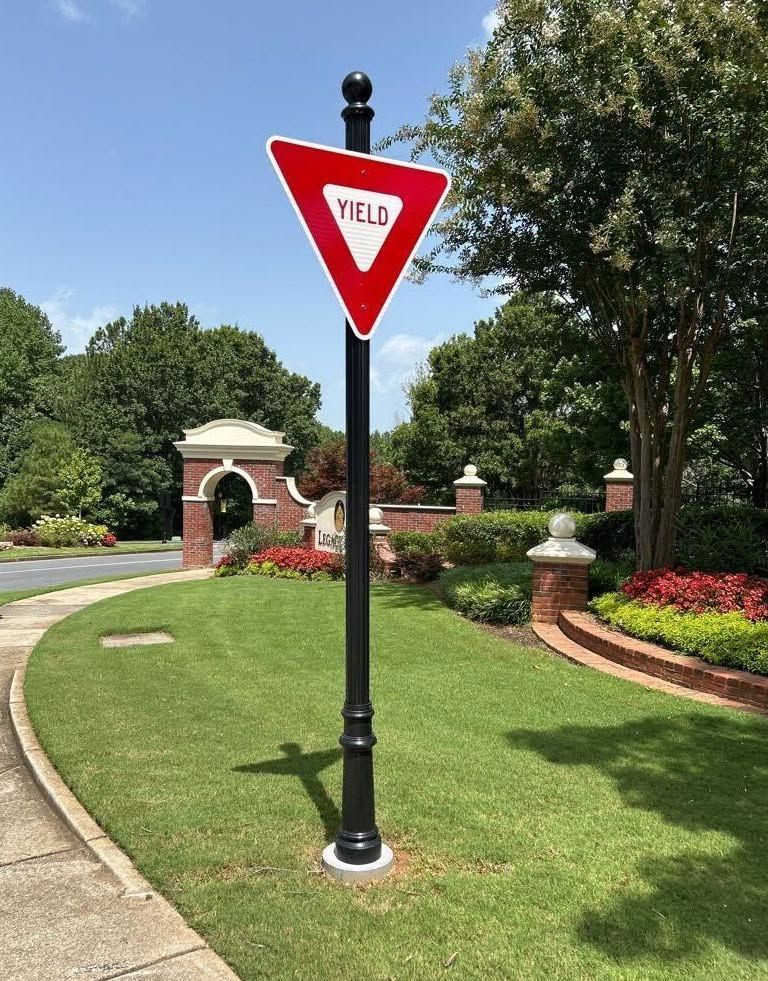
What Coordinated Signage Systems Accomplish
Professional installation positions signs at standardized heights with reflective coatings that remain visible during nighttime and adverse weather, while decorative entrance signs incorporate custom finishes and typography that establish neighborhood identity from the first intersection. Material choices determine performance under Atlanta's humidity and temperature swings—powder-coated aluminum resists corrosion longer than painted steel, and thicker gauge metal withstands impacts that would bend lighter alternatives.
Once installation completes, drivers and emergency responders navigate residential streets without confusion caused by missing or conflicting markers, while HOA boards maintain consistent branding through entrance features that match mailbox designs and architectural guidelines. Street name signs mounted on decorative posts create a uniform streetscape that distinguishes the community visually and functionally from neighboring developments.
Coordinated neighborhood branding extends beyond individual signs—matching mailbox and sign designs create visual continuity that property managers reference during compliance reviews, and phased installations allow communities to budget replacements without disrupting occupied areas. Projects requiring municipal approval receive documentation showing compliance with traffic sign standards, while custom decorative elements incorporate HOA logos, specific color palettes, and font selections that align with covenants established during original development.
What Property Managers Ask About Signage Projects
Communities managing signage improvements and HOA boards coordinating neighborhood enhancements often need clarification about materials, installation timing, and project coordination before committing to system-wide replacements.
What materials perform best under Atlanta's climate conditions?
Powder-coated aluminum resists the humidity and temperature fluctuations common in the Metro Atlanta area better than painted steel, which shows rust at mounting points within three to five years of installation.
How does coordinated signage improve community appearance?
Matching street signs, entrance features, and mailbox systems create visual consistency that reinforces neighborhood identity and simplifies compliance with architectural guidelines during board reviews.
When should communities schedule sign replacement?
Faded lettering, visible rust, bent posts, or missing reflective coatings indicate signage has reached the end of functional life and should be replaced before legibility issues affect navigation or emergency response.
What installation methods prevent post movement?
Below-grade concrete footings extend beneath the frost line and cure for 48 hours before sign mounting, preventing the post lean that occurs when seasonal ground movement shifts inadequately anchored installations.
How long does neighborhood-wide installation require?
Phased installations allow occupied communities to replace signage incrementally, addressing high-visibility entrance areas first while scheduling interior street signs around resident access needs and minimizing disruption to daily traffic patterns.
GSi Mailboxes & Street Signs coordinates signage projects from material selection through final inspection, managing installations that align with HOA approval timelines and municipal permitting requirements. Request a consultation to discuss decorative entrance signs, street name markers, and coordinated mailbox systems tailored to your community's architectural standards and replacement priorities.